There are so many gems in this Viktor Krankl interview. My father reminded me of it today and it’s worth the 30 minutes if you are looking learn more about about meaning & purpose. It’s a simple message:
He talks about how people react to unchangeable events. When these events are out of our control, it’s how we choose to react determines our happiness.
Don’t forget, you have the freedom to choose how you react to everything and everyone you encounter each day.
“Between stimulus and response there is a space. In that space is our power to choose our response. In our response lies our growth and our freedom” – Viktor E. Frankl
This advice can be applied in any every day situations like traffic, a long security line at an airport meetings, the dinner table or interacting with colleagues and customers in a high pressure meeting. Every interaction you have with something else is an opportunity to grow and ask yourself how you would like to respond.
If you haven’t already read it. I’d highly recommend reading Man’s Search for Meaning by Viktor E. Frankl. It’s worth revisiting every so often for guidance into the meaning of life and why a lesson and opportunity to grow is available everywhere we look.
Teddy Roosevelt said, “The first requisite of a good citizen in this Republic of ours is that he shall be able and willing to pull his weight.” A Good Citizen properly fulfills his or her role as a citizen.
A mercenary takes part in a battle, but is not a national or a party to the conflict and is motivated to take part in the hostilities by the desire for private gain.
People, not product, will determine the success or failure of a company. You can have an excellent product and fail because you’ve assembled the wrong team. Building a business at scale is hard. It’s fraught with uncertainty, highs, lows, wins and losses. It’s an emotional roller coaster. Good citizens roll up their sleeves when there’s work to be done. They pitch up every day and are in service to each other. Mercenaries leave if it’s about anything but themselves.
The list of GC attributes I look for when building a team:
Compassionate
Collaborative
Curious
Comfortable with uncertainty and mystery. They feed off it and enjoy it
Cocky in a kind way
Gritty
Impatient
Kind
Loyal
Persistent
Pragmatic
Polite
Persuasive
Zen
Pointers for spotting a GC:
They use ‘we’ and “our” a lot when talking about solving problems
They laugh at themselves
Pedigree & degrees don’t matter. It’s about what you can offer now and in the future
They have a history of execution and getting things done
They listen more than they speak
They are self-aware
They are black belts in verbal judo. The best answer always wins the tussle
They ask for feedback, welcome it, and act on it
They have detractors. Probably a couple of bullies they’ve stood up to in the past
They respect the people they work with and are friends with them
They are rewarded and recognized by their peers
They offer up reference checks from peers and previous investors/partners
They treat interviews like a two-way street and ask questions about the team, motivations and product
They seek you out, vs. running away from their current role or company
They have hobbies outside of work
Ad hominem is not an option
They are comfortable making decisions with incomplete data
The understand the importance of luck, timing and preparedness
They are always learning, experimenting, tinkering & tweaking
Titles don’t matter
So what’s the opposite of a GC?
In my experience it’s the Mercenary. The are seductive, because they get things done, but don’t be fooled – when the going gets tough and it’s time to contribute to the greater good and sacrifice something…they leave.
They use “I” and “they” when describing their current role and company
They describe past and present colleagues as ninkanpoops/clueless/tone deaf/opaque/idiots/blind/wrong/lazy
They hold grudges
They “get things done” through coercion and intimidation
They stereotype people and roles
They don’t believe in luck and good timing. It’s all about talent & A players
They are “Remember whens” – “remember when” is the lowest form of conversation. They dwell on the past, live in the world of what was instead of understanding that things change and you need to move forward. (The Sopranos Season 6, Ep 15)
Listen for phrases like:
They don’t listen to me
It’s them not me
I don’t have the resources
It’s not my responsibility
You need me
I inherited that problem
My team wasn’t big enough
They wouldn’t promote me
I told them, but nobody listened
Give me people a chance to change
Everyone can change, and I’ve seen it happen many times. Sometimes Mercenaries become GCs and even inspiring presidents, but if it looks like a goat and sounds like a goat it normally is a goat.
I was in Sao Paulo, Brazil for a wedding a couple of years ago and jotted down some thoughts and impressions in Evernote. I shared the page with my brother in London who made a great point. He reminded me that keeping notes is essential. Our memories change so quickly, and it’s great to have a record like this, which is untainted by future experience. Future experience & hindsight is good, but don’t forget the original thoughts when they were raw
It’s a good habit when traveling.
Here are the notes if you are interested:
Flying in the outskirts of SP reminded me of a flood plain near a river mouth. The vast population of SP is a sea of people slowly creeping into every nook and cranny
People, traffic – High Energy!
Initial feel is very welcoming. Bit like Durban, Barcelona, BA or Cape Town
Beautiful people
Portuguese language dominates. English gets you nowhere
Have devolved into pigeon Spanish and hand signals while smiling
Motorbikes everywhere. Constantly hooting like little ducks
Taxi ride from airport GRU to hotel was R110. 1 hour ride to hotel with very heavy traffic. Urban planning is an afterthought
Every restaurant is jam packed. Lots of smoking in cars. No smoking allowed in restaurants
Everyone dressed in colored shirts, but conservative feel to the business world
Congonhas Airport is in the city. Planes fly low over the city every 10 minutes. Constant noise
Very international city. (Need a helicopter to get around.)
Ibirapuera park is beautiful – dogs, skateboards
Heading to Buzios now. beach town
Porcao – Rio meat restaurant that I’m going to try
I’m off to my brother’s wedding in a couple of weeks. It will be the first time my immediate family has been together since 2006. Getting together these days can get a bit pricey and off course means taking time off from the daily gig, but I never hesitate. Thinking about this made me reflect on our priceless family trips over the years.
A road trip in my family included piling four young kids and two parents into a Volkswagen microbus, and trekking off across the country. Sometimes it was a 2000-mile round trip to a National Park or a maybe it was a 100okm trip to Cape Town and back to pick up a new puppy. This was before the days of AirBnB or VRBO, so my folks would organize pit stops and accommodation along the way. Sometimes these stops were at family friends and sometimes they were in roadside hotels. Normally it was one room with all of us piled in, and sometimes it was two rooms with my sister and parents in one, and brothers and me in the other. If we were in the bush and I was sharing with my brothers then I’d go sleep with them telling me the hyenas had broken through the fence and I would be eaten first.
Most stops along the way involved unpacking the car, taking family pictures with my dad’s beloved Nikon and exploring our new accommodations. It was exciting winding down a dirt road towards a small dark farmhouse or checking into a hotel at 9pm at night. As a kid I had no concept of time or space other than the road ahead, dinner (probably sweet corn on toast) and which bed I’d be sleeping in that night. Picking beds with older brothers involved my mother’s intervention once the younger brother (me) was told his bed was the mattress on the floor next to the door.
A highlight on these road trips was sitting up front with my dad in the passenger driver seat, wearing the seatbelt while studiously paging through a well used road atlas. My father had a rule – you had to be a certain height before you could sit up front so that the seat belt would cross your chest and not your neck when you were sitting upright.
A couple of times the car would overheat and we’d limp into a small Karoo town garage in the middle of nowhere. Remember this was before cell phones, so if we broke down on the road then we flagged someone down for help. A roadside stop for us would mean target practice with my older brothers, by throwing stones at anything that looked like a target, irritating my little sister or just waiting around watching cars go by. I never doubted for a second it was a permanent breakdown…sooner or later we piled back into the car and moved on to the next adventure. Only now do I appreciate how my parents must have stressed about getting the car fixed, the delayed schedule, keeping us fed and occupied…remember no cell phone to contact the hosts awaiting your arrival.
As a family we still laugh about these trips. Whether it was Yosemite when we got lost in back country trying to find the Hetch Hetchy valley or finding a cockroach in a bowl of soup in a small back country hotel in Pilgrems Rest. Most of the time it was the unplanned events along the way that keep us laughing.
I remember a return trip from a National Park and setting up “camp” in a small town in the middle of nowhere. We were all piled into one room and it was so cold we all put multiple layers of clothes on and slept next to each other to warm up. I don’t know what my parents were thinking but I was having the time of my life…it was so exciting. We were freezing cold but everyone was laughing and trying to keep warm. My mom told me later they woke us up at 4am and left because the car was warmer. We were all still wearing 3 or 4 layers of clothing and headed to the gas station to fill up with petrol. At the pump next to us there was a farmer filling up his truck…and he was wearing shorts and a t-shirt. We still talk about that cold morning and laugh about the “farmer at the gas station”.
These memories are the glue that binds my family together. It’s the small moments we still laugh about years later.
Looking back I think my parents were probably a little nuts and naive to pile 4 kids into a microbus and drive across the country, but I’m glad they were and I wouldn’t trade it for anything.
From time to time I’ll be posting a guest piece. Today’s post is by Bill Gordon. Bill is a friend, mentor and soon to be my kiteboarding coach (he doesn’t know that yet). Thanks Bill.
* * * *
Every month I meet with a small group to focus discovering for each of us what is our purpose and mission and why we are here in this world?
Being practical people we also talk about how that relates (if at all) to “being successful” and the normal financial commitments we all have for such things as monthly house payments, utility and car payments, taking care of our families, etc.
After many useful discussions, and books, and journaling, I haven’t made as much progress as I’d like. However, this week I heard a talk from a man named John Ortberg who’s insights I found useful. I wanted to share these in case they help you get any closer to clarity around your mission and purpose.
The idea that I took away from the talk was that finding our Mission or Purpose has to do with finding the intersection of 5 key things. The 5 things are:
Passion – what fires you up? Is it injustice, education, hunger, sickness/health, helping people grow, making people happy, something else…
Gifts – what gifts do I have? Everyone has gifts to offer. Hospitality, administration, organization, encouragement, communication, teaching and many more.
Scars – where have I been hurt? How can I use this experience or pain to inspire me to help others? The knowledge and experience of the pain will equip us to help others and will inspire our passion.
Partners – Finding a person or people who share a similar mission or who may want to be part of your mission.
Need – where is there a need in the world? Where is there need around me? Where is there pain or annoyance or frustration that needs to be solved?
If you’ve been keeping a list of thoughts and ideas on where you might like to focus your time and energy, run those ideas through this list of 5 items to see if there is an answer around the 5 that makes sense to you (and if you haven’t been keeping a list, I encourage you to start).
I hope this gets you closer to finding your path and purpose!
Ethical questions get really tough when you start to intellectualize them.
Here’s a mock question? Should you allow tobacco companies to advertise with your company. This means exposing their brand and messaging to your community.
Here’s the dilemma…the evidence tells us that smoking causes cancer and host of other health problems, but the tobacco industry creates jobs and it’s a free country, people can smoke if they want to, so who are we to judge? Smoking related illness cost the taxpayer millions of dollars per year in healthcare resources and burden the already strained healthcare networks. That’s not a good thing right?
What about the cash these advertisers give you? You could use that money to experiment and build life changing products.
What about the optics? How much revenue will they bring in for the company? What is if it’s only 10% of total ad revenue vs. 50%? Is there a threshold % that makes it acceptable? By allowing these brands to advertise are you indirectly enticing more kids to start smoking?
Other companies take their money, why shouldn’t you?
See what I mean…it’s starts to get really sticky when you try to answer the question within an intellectual framework. You could probably justify a yes or a no answer.
Why not try something different? Ask your gut the same question with the following context – Are you making the world a better place by [insert question]. In other words are you contributing to a better world by advertising cigarettes to your audience. Avoid the temptation to define “better” or “world”, just ask yourself the question. Your gut will give you the answer. It may not be the answer you want to hear, but my advice would be to go with it.
When I don’t go with my gut on these things, I normally fall on my face.
Family and friends are so important. Human beings are social animals and up until about 150 years ago we still lived in close knit villages. The village included immediate and extended family from sisters, brothers, aunts, uncles, cousins, godfathers and godmothers. Everyone looked after the young and the elderly.
In a very short time period we’ve moved from close knit community of multi generational family and friends to a diaspora. It’s not in our DNA to be unplugged and separated from the tribe.
Raising kids is a great example. Most young mothers give birth in the hospital and are shipped out and home the next day. There they sit with a new born child with zero support from immediate family who are probably living in another city or even another country. In response to this there’s a growing trend for young parents to employee a night nurse during the postpartum period. A night nurse or midwife “baby sits” during the night and helps guide the new mother through the first couple of weeks. It also allows the parents to get some sleep and be engaged when they are with the child. In the past there would be sisters, aunts, mothers, grandmothers and friends to teach and cover for the mother. If you think about it it’s actually not such a crazy luxury but a necessity and going back to our village roots. It’s sad that the majority of young mothers can’t afford this extra help and have to go it alone.
Skype and Facetime don’t bridge the gap. We need physical interaction and to be around people that know us. We are under the illusion that we are now more connected than we have ever been, while it’s actually quite the opposite.
Invest in your friendships and family bonds – build a village.
Travel always gives me a new perspective on where I live. Every time I return to San Francisco I love and appreciate it a little more. Here are a couple of things I’ve taken for granted in the past:
1. Hetch Hetchy tap water
2. Public places, sidewalks and restaurants are accessible by wheelchair
3. KQED
4. Cigarette smoking in public is pretty much outlawed and shamed
5. MUNI and BART
6. Healthy local California food is accessible and affordable
7. Food hygiene and safety standards are enforced in restaurants
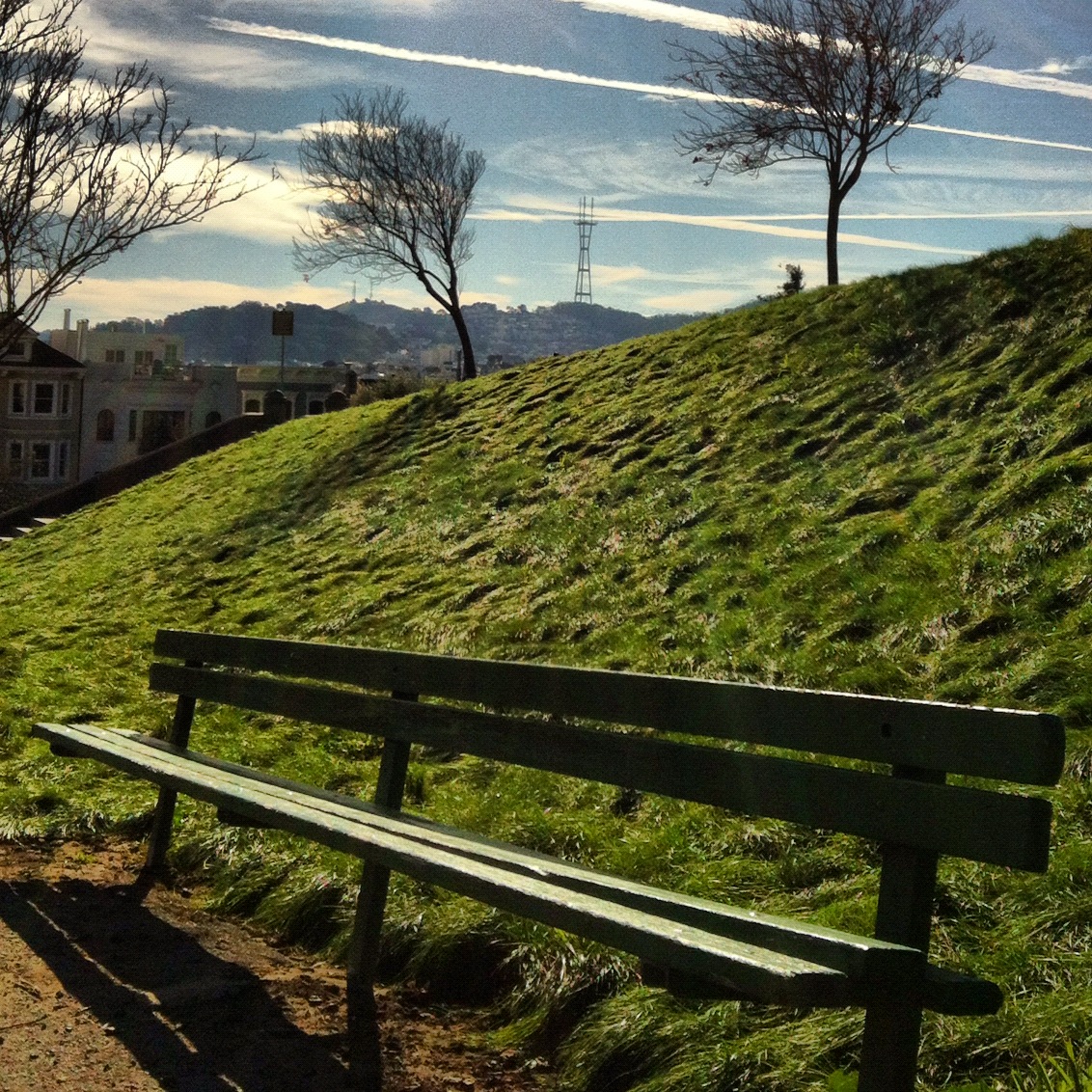
8. Public Parks like Alta Plaza, Lafayette, Duboce and the Presidio


 markbartels.org