Learning how to wing it

We are living through an event that nobody alive has dealt with before.

When I look for guidance from other people, I don’t ask them for advice, I ask them for shared experiences. How did they handle a similar set of circumstances, how did they feel, what was the outcome? Shared experience is powerful, because it’s not tailored advice, it’s a lesson I can learn from and then apply part of that lesson to my own problem or question.

There is no shared experience when it comes to a global pandemic. Nobody in the last 100 years has lived through a worldwide synchronized shock like this one. It’s different from a World War because even during World War One and World War Two economies functioned, global trade continued, and people weren’t locked up at home in every country. When an earthquake or hurricane occurs, we can solve the problem with a surge – a surge in relief workers, doctors, engineers, and money is the fix. This virus is the opposite; the more people that arrive to help, the higher the infection rate. It’s a deadly trap that uses sick people as bait to lure in the healthy. So what’s the playbook?

When seeking out guidance, remember the following:

  • Wealth doesn’t equate to intelligence and street smarts. In the last decade of easy money, there are a lot of people who think they are smart. Most of the time, they are confident and wrong. Unfortunately, we flock to overconfident talkers because we conflate overconfidence with competence. Identify these talkers and mute them. They have no shared experience and will lose their money and overconfidence as fast as they made it.
  • Being an expert in one field doesn’t make you an expert in all areas. I don’t want a brain surgeon fixing my toilet, and I don’t want a plumber fixing my brain. That said, listen to smart people gifted in pattern recognition. When Jeff Bezos or Bill Gates has something to say, then I shut up and listen.
  • Check-in now and then on the crazy folks. The crazies aren’t muzzled and sometimes speak truth to power. There are some diamonds in their stream of consciousness.
  • Don’t listen to what people say, watch what they do.
  • Think for yourself! Put on your oxygen mask before helping others, which is an essential air safety trip and a useful metaphor for everyday life. If you are taking care of yourself, spiritually, mentally, and physically, then you will be much better placed to listen and assist others.
  • Be okay changing your mind when new information crops up. Smart people change their minds all the time.
  • Keep it local. Be a good citizen and neighbor, listen to community advice and local officials.
  • It’s okay to say you don’t know.

angelina-litvin-K3uOmmlQmOo-unsplashPhoto by Angelina Litvin on Unsplash


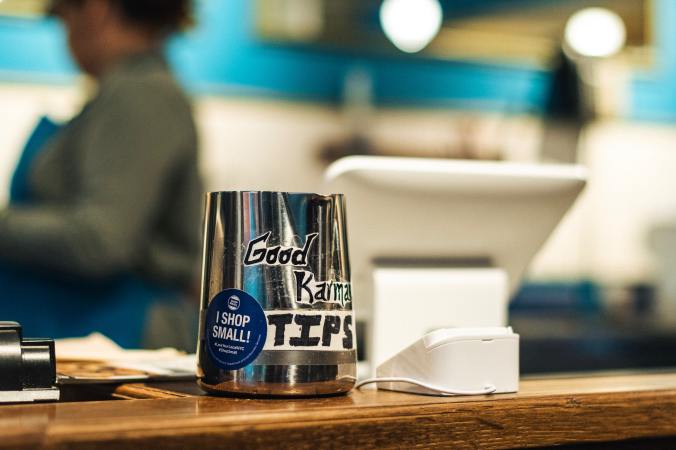
Coffeehouses aren’t for coffee

“The Ottoman coffeehouses brought together citizens across society for educational, social, and political activity as well as general information exchange. Before their introduction, the home, the mosque, and the shop were the primary sites of interpersonal interaction. Eventually, though, there existed one coffeehouse for every six or seven commercial shops. And by the end of the nineteenth century, there were nearly 2,500 coffeehouses in Istanbul alone” – source https://en.wikipedia.org/wiki/Ottoman_coffeehouse

People don’t go to the gym to exercise

People don’t go to bookstores to buy a book

People don’t go to the beach to swim in the ocean

People don’t go to concerts to listen to music

People don’t run marathons to get fit

People don’t hang out in coffee shops to get caffeinated

People don’t go to church, mosque or synagogue to worship

People don’t go to meditation retreats to meditate

Humans are social animals. We congregate in places because we crave face to face interactions and bodily contact. The world has made a choice to step into the equivalent of a medically induced coma. We are like a plant that lies dormant in the winter, waiting for spring. Humans aren’t meant to be inactive and alone. We thrive and grow when we interact during the messiness of everyday living. This time shall pass, and then we’ll get back to who we are as a species.

davor-denkovski--qt_TCQxFrw-unsplashPhoto by Davor Denkovski on Unsplash

The art of browsing and lingering

I popped out to the shops this evening to pick up some essentials. We are all meant to be about 2 meters apart at all times, so it was a bit awkward wandering around the shop. I’ve noticed that most people don’t make eye contact and quietly get down to the business of shopping. It’s like a smash-and-grab robbery, they get in and get out, no time is wasted, and there’s no small talk.

One of the things I miss most about pre-Covid-19 shopping is the act of browsing, lingering and lurking. It hit me when I was standing in an aisle deciding what to buy, and I noticed a woman pacing a few yards behind me. I realized she was waiting for me to leave before she could pick up want she wanted. I quickly moved aside to give her space, and she swooped in and picked up what she needed, just like a hungry seagull grabbing a french fry from someone’s plate.

I’m looking forward to some quality browsing and lurking again when the urgency of essential shopping is behind us. Things like:

Browsing the butchery and enjoying the look of all the different cuts of beef and poultry. Checking to see if the leg of lamb is from New Zealand or Sonoma County.

Taking a slow walk through the farmer’s market on a Sunday morning and sampling some juicy fruit and checking to see if the eggs are intact before I buy them. The fresh seafood displays with crabs, salmon, and scallops on ice are always worth a mouth-watering look.

Spending some time wandering through a dusty second-hand bookstore where there is a little table and chair at the back of the room inviting me to sit down and test drive a book or two.

Sitting at a sushi bar and listening to the banter from the sushi chef and a local barfly.

I’m looking forward to supporting small business owners in person again and sharing a quick chat and smile when we all get back out there.

alejandro-duarte-8dwYOzLPCtA-unsplashPhoto by Alejandro Duarte on Unsplash

It’s time to adjust the sails

“The pessimist complains about the wind; the optimist expects it to change; the realist adjusts the sails.” -William Arthur Ward

Putting your head in the sand and complaining won’t make this virus go away. The virus is patient and will wait you out.

Blaming the country where it started won’t create a vaccine and help you go back in time.

Be a good citizen and listen to the experts. Ignoring doctors and medical guidance will endanger yourself and others.

Look after yourself, have a good cry, get angry, vent, and comfort others, but don’t panic and freeze like a deer in the headlights.

Make the necessary adjustments to your life and then get busy. The cure for anxiety is action.

austin-neill-hP7sUT7BaTY-unsplashPhoto by Austin Neill on Unsplash


I am the master of my fate: I am the captain of my soul.

Invictus
William Ernest Henley – 1849-1903

Out of the night that covers me,
Black as the Pit from pole to pole,
I thank whatever gods may be
For my unconquerable soul.

In the fell clutch of circumstance
I have not winced nor cried aloud.
Under the bludgeonings of chance
My head is bloody, but unbowed.

Beyond this place of wrath and tears
Looms but the Horror of the shade,
And yet the menace of the years
Finds, and shall find, me unafraid.

It matters not how strait the gate,
How charged with punishments the scroll,
I am the master of my fate:
I am the captain of my soul.

matt-artz-4KaY-etsnKc-unsplashPhoto by Matt Artz on Unsplash

Cytokine storms

“Sometimes,” Michael Kinch, from Washington University in St Louis explained to me, “the immune system gets so ramped up that it brings out all its defenses and fires all its missiles in what is known as a cytokine storm. That’s what kills you. Cytokine storms show up again and again in many pandemic diseases, but all in things like extreme allergic reactions to bee stings.” – The Body: A Guide for Occupants by Bill Bryson.

Closing borders, shutting down commerce, grounding airlines, and restricting physical contact during Covid-19 is a country’s equivalent of a cytokine storm. We need to do these things to save lives, but if the lockdown reaction is too prolonged and too severe, then the response to the virus might be what ends up killing us in the long run. Zero trade and zero commerce will lead to civil unrest, famine, and war.

I think helpers will appear in the coming months. These people will be immune to the virus because they have survived and developed antibodies. Serology tests would be ideal. These immune helpers could get issued digital tattoos that give them access to markets and commerce. Over time these helpers will grow in numbers and rekindle the economy while protecting the at-risk untouched population who are sheltering in place.

elizabeth-tsung-pYd6_Iw8TpM-unsplashPhoto by Elizabeth Tsung on Unsplash

Thank you for your service

I wonder if there will be public holidays to honor the teachers, medical professionals, food workers, Grocery clerks, cashiers, delivery drivers, and warehouse stockers. These are the people who are putting their lives on the line every day to keep us alive as we seek shelter in our homes.

I think in the future, we’ll hear phrases like “Thank you for your service” and “Thank you for your sacrifice” when learning that someone was a teacher, nurse, delivery driver during the pandemic.

People have short term memories, and I’m sure the sacrifices of 2020 will be forgotten. That’s why war memorials are erected, and special ceremonies are held. Heroes are commemorated every year so that people don’t forget and don’t repeat the same mistakes.

My school in South Africa has a gray stone war memorial that is full of engraved names of the boys who died in the First and Second World War. The war memorial guards a grassy quad where the school gathers every year for the November 11th Memorial Service.  

At the end of the service, the headmaster reads the famous and sad verse from Laurence Binyon’s The Fallen:

They shall grow not old, as we that are left grow old:

Age shall not weary them, nor the years condemn.

At the going down of the sun and in the morning

We will remember them.

Everyone then repeats the final line: We will remember them.

I hope we remember the essential service workers of Covid-19 2020. I hope we pay them more, I hope we look after their families, I hope we are kind to them when things get busy again.

One of the ways to honor them is to pay more for something because it’s made locally by people we trust and people we can rely on. We are in this mess because we outsourced our manufacturing and labor to the cheapest bidder without caring about whether we share the same values when the pressure is on. Now we know the real cost, and it’s a lot more expensive.

dan-smedley-K_P6uDekLKI-unsplashPhoto by Dan Smedley on Unsplash

Empty Sky

I took the boys for a walk this evening. We needed to burn off some energy after being cooped up the whole day.

Every evening at dusk I usually see the A380s and Dreamliners, fully laden with fuel and luggage slowly gaining altitude as they head out across the Pacific. The setting sun reflects off the tail-wing, so it was easy to spot the airline. Most of them are heading to the US for an overnight flight. I like to imagine all the passengers settling in for the long haul flight. The headphones and blankets are all wrapped in plastic. The seatbelt sign is on, so people are browsing in-flight entertainment, peering out the windows. The atmosphere in the cabin feels new, exciting, and full of hope.

I looked up this evening and realized that there were no planes in the sky. Not one. The international flights are grounded. Waiting just like us.

It’ll be good to see their glinting tail wings up there again.

chad-peltola-Rch8oP-O5sU-unsplashPhoto by Chad Peltola on Unsplash

Body distancing

Let’s stop calling it Social Distancing. Maybe we should call it Body Distancing or Contact Distancing. I’m more digitally and socially connected to my friends and family than I’ve been in a long time. We are all checking in with each other daily.

The conversations are roller coasters. We share quarantine jokes, and then it’ll swing to an article about medical supply shortages. It’s just part of the new way we connect and converse across closed borders and countries. Thank goodness for WhatsApp and FaceTime.

When we are on the other side of this thing, we will have some new digital social muscles to flex, and of course, a new appreciation for a good hug when we see the people we love in the flesh.

annie-spratt-penahevUgSA-unsplashPhoto by Annie Spratt on Unsplash

Conversing with the sun

Yesterday morning I woke up in my son’s bed. I’d found my way there sometime during the night. At 1am in the morning, he called for his mother, but she was already in the other room with his sick brother, who was nursing a cough. I appeared at his door and was initially told to get lost because he wanted his mom. It’s a little like turning up at the airport and asking for an upgrade – his mom is the business class upgrade, and I am the economy seat at the back of the plane next to the toilet. Everyone wants business class, I get it. I calmly explained to him that I was all he could get, and as I turned around to leave, he decided to take the trade and told me to climb in.

I woke up with him, curled up next to me, and fast asleep. I couldn’t tell the time, but I knew it was a bit later than usual and decided to stay still so not wake up the house. Sleeping in with young kids is rare. In that brief moment, I forgot about all the craziness in the world – closed borders, shelter in place, the sad stories coming out of Italy, talk of recession, and depression. Then it hit me like a wave, and I thought, “oh, I remember now, all of this shit is happening, and it’s real.” I felt my chest tighten up and looked for my phone. Time to go.

I made a cup of tea and walked into the back garden. It was a dead still morning, the sun was up and warm. I stood out there for a bit and felt the grass under my feet. The moment of normalcy gave me a lump in my throat. I think it was the act of appreciating the simpleness of the warm sun and the quiet of the morning. The earth whispered to me and told me she’d been here all the time and I could come back anytime I want to.

‘I have conversed with the spiritual sun. I saw him on Primrose Hill.’ – William Blake