The shoulder cut is the tastiest

Between high seasons is my favorite time. The tourists have gone home. The surge of temporary workers has receded. The skeleton crew at the restaurants are the full-timers and owner/managers. The service is slower and less manic, but everyone knows the menu and has tasted all the dishes. People have the time and space to chat, and it’s not about turning over tables as quickly as possible.

The clouds have a different feel after the long summer, and the sea is no longer inviting you in. The evenings and early mornings have a bite reminding you that autumn is coming. Breathe deeply. Enjoy.

michael-wRqtJrHgGxY-unsplashPhoto by Michael on Unsplash

We aren’t getting out of here alive

A newspaper is delivered to our house every week. It’s one of those free papers that covers all things local from sport, municipal votes, upcoming festivals, a police blotter, letters to the editor. There’s always a glossy real estate insert. The back page covers the local sports teams.

I enjoy flipping through it because it informs me about local news that the internet and larger news organizations ignore. There’s not much money in newspapers anymore, but these small newspapers soldier on. There’s a whole classified section at the back advertising plumbers, injury lawyers, immigration help, language courses, etc. that I’m sure pays the bills.

There’s also an obituary section, and I’ve made a habit of reading through them. The other day I read about someone who was born in Italy and moved across the globe in her twenties, met her husband, and built a whole new life on a faraway continent. When she died, she left behind children, grandchildren, and great-grandchildren. Others died young and sadly left young families and friends behind.

Death notices are not something that gets a lot of clicks during our daily internet browsing between email, Twitter, and Instagram, so I’m grateful I get to read about people’s lives written by those who loved them.

The obits gently remind me that death is part of all of our communities, and it doesn’t discriminate. It’s coming for all of us, and we aren’t getting out of here alive.

roman-kraft-_Zua2hyvTBk-unsplashPhoto by Roman Kraft on Unsplash

Ask the blockers to move aside and go with the flow

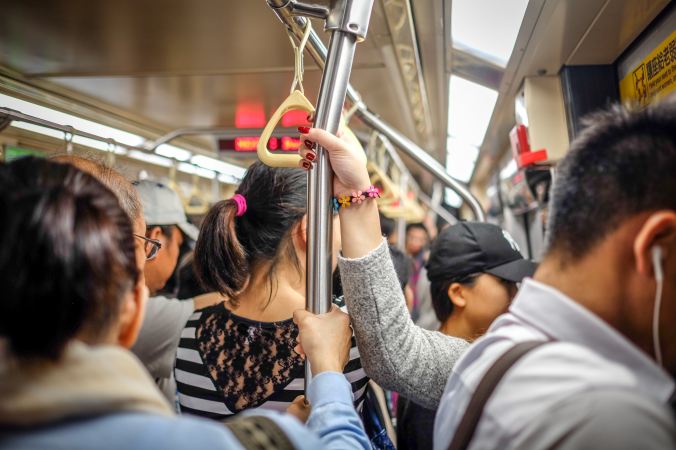
People create air pockets on buses and trains all the time. My stop will be coming up, and I’ll make my way to the exit doors and will be blocked by someone. It’s usually a man with a large backpack still on his back standing in the way. He’s blocking the exit path, and there’s a considerable space in front of him where all of us could congregate before the bus stops. Instead, people build up like a dam of water behind him. This happens a lot, and it’s intriguing to see what the other blocked passengers do. Some surrender to the blocker and his backpack and wait, others contort their bodies and miraculously squeeze past him without making bodily contact. Others politely ask the person to move aside. As soon as he steps aside, a rebalance happens, and everyone flows past him and into the pocket he created. Now that the system is back in equilibrium, people can exit quickly, the bus stays on time, and the ongoing passengers are happy. Most of the time, he’s oblivious to what he’s doing and quite happily and absent mindlessly moves aside and then goes back to looking at his phone.

digital-sennin-PyRqLAE0d0E-unsplashPhoto by diGital Sennin on Unsplash

Monkeys on a tin roof

The wake-up call was around 5am in the morning. It sounded like the dogs had climbed onto the tin roof. It was the monkeys scrambling and playing on the roof just before the sunrise. The dogs went bonkers, and it was an all-out war. Then it was over just as quickly as it started. The monkeys scampered back into the bush with the dogs in hot pursuit. Some of the dogs barked so hard that their front legs bounced off the ground.

After the monkey alarm sounded, the bush went quiet again as the sun rose, and the smells and sounds of the hot morning kicked in.

Just another day in Africa.

varshesh-joshi-HkfP5dYcMjw-unsplashPhoto by Varshesh Joshi on Unsplash

Sticky hot days

We have entered the sticky hot phase of the summer. Ceiling fans are going full tilt, the windows open and the sounds from the street trickling in.

Thank goodness for window screens or it would be bug city.

If aliens from another solar system were on an Earth safari, the best time to view us humans would be early morning before 9am and then after 4pm when we venture back out into the wild as the day cools down.

I love this time of year, as the days start to get shorter and autumn is waiting in the wings.

lucian-dachman-NzspFL1cECU-unsplashPhoto by Lucian Dachman on Unsplash

Defining success and what satisfies you

The older I get, the more sense this makes to me.

“To laugh often and much; to win the respect of the intelligent people and the affection of children; to earn the appreciation of honest critics and endure the betrayal of false friends; to appreciate beauty; to find the beauty in others; to leave the world a bit better whether by a healthy child, a garden patch, or a redeemed social condition; to know that one life has breathed easier because you lived here. This is to have succeeded.” – Ralph Waldo Emerson

This Charlie Munger quote, which was sent to me via @Maven_Insights, also helps and, in some way, says the same thing to me.

“You’ll be happier if you reduce your expectations than if you try and satisfy them. It sounds silly, but it’s so obvious. Many of us are fairly content with pretty moderate success. That is worth knowing, because that’s what most of us are going to get.” – Charlie Munger

Here’s the last one from Richard Branson.

In the end, I’ve realized that legacy is not important except to your children and family and friends. When I am on my deathbed, I just want to feel as if I have loved and been loved, done some good in the world, and made a difference here and there. – Richard Branson

virginia-choy-z0C-baZ616U-unsplashPhoto by Virginia Choy on Unsplash

Owner-managed passion

Our favorite coffee shop closed its doors for the last time earlier this month. It was owner-managed. The owner was there every day. He was barista, baker, and menu editor-in-chief. He had a couple of rules:

  • No decaf coffee. If you want coffee, then you get it how it was grown.
  • The chocolate mochas were made from melted chocolate he sourced in France
  • The almond milk was made fresh every day in the cafe
  • No wifi
  • No garbage bins in the shop
  • Small batches of banana bread and croissants were freshly baked in-house
  • When it was super busy, I’d see his wife and son pitching in. It was a family affair
  • Small talk wasn’t a requirement for ordering your coffee. There was no time for chit chat

He paid attention to the details and quality mattered. Every cup of coffee he made was an extension of himself. When he made chocolate mochas, he stirred in the melted chocolate and made sure it dissolved just right. It was all about quality over quantity.

He wanted to be there until he didn’t. We were sad to see him go but were grateful we got to taste his passion.

nathan-dumlao-ulPd2UCwZYk-unsplashPhoto by Nathan Dumlao on Unsplash

Patterns and production lines

If the numbers don’t look right then resist the urge to analyze crappy, incorrect data. Junk in will mean junk out. All of the questionable information coming out of China on the Coronavirus is a topical example. Nobody knows what to believe. There’s no right answer at this early fuzzy stage.

Instead, look for patterns and trends in the numbers and information trickling out. Bad numbers can still have patterns and trends. Look for directional signals and follow them. What are airlines doing about flights, cruise ship touring cancellations, government travel bans, are schools still closed, are production lines disrupted? It’s easy with hindsight, but it’s hard to get a black and white answer when it’s early and the numbers are wrong.

joshua-sortino-LqKhnDzSF-8-unsplashPhoto by Joshua Sortino on Unsplash

How many more cycles around the sun?

My dad is in his 70s. We live in different countries. Travel is taxing on our bodies, and at some point, getting into a pressurized flying tin can for 12 hours, and shuffling through airport security and customs isn’t appealing or sustainable anymore. As an immigrant, I can count the number of times we will see each other in the coming years. If health, schedules, babies, school holidays and careers go well then maybe we see each other for a couple of weeks every year for the next 30 years. That’s 30 trips max, and I’m being generous. That’s how immigrants think about family time and moments together. We know the visits and moments together are finite, and each one is sacred.

tanishq-tiwari-ZYzLDzHZF08-unsplashPhoto by Tanishq Tiwari on Unsplash

Buskers and the audacity of hope

I’m amazed by the talent and guts of the buskers I see on my walk home. They set up in a crowded thoroughfare, tune-up their guitar, and start belting out some music. There’s no backup band or support crew, it’s just them playing for their supper at 5pm on a Tuesday evening. A crowd forms typically, and some people take out their phones to capture a song or a moment. For every pop star who’s broken through into the big time, there must be millions of performers who will never make it off the busy pedestrian path and into a recording studio. I suppose the modern-day digital buskers are the people posting their performances onto youtube and hoping for some kind of traction. There’s so much talent out there screaming to be discovered, but so little attention and time. Maybe ignorance and audacity of hope are why some of them succeed because if they knew the odds of failure, they would never try.

maaria-lohiya-LhWr3yGGC6k-unsplashPhoto by Maaria Lohiya on Unsplash