The truth 100 years from now

How will we retell the pandemic stories of 2020? If the news we read today is already editorialized, full of clickbait, and half-truths, then the history books 100 years from now will be even worse.

Imagine all the exaggerations and lies that will be spun in the coming years as we talk to our grandchildren about lockdowns, hoarding, Wuhan, border closings, social distancing, face masks, and Donald Trump.

We live in an era where everything is documented and broadcasted as it happens. Maybe platforms with community-generated content like Twitter, Instagram, and Facebook will be the source of truth when people look back and seek out the real stories of the 2020 Global Pandemic. COVID-19 will be the most documented and written about virus in the history of the world.

I wonder if the truth survives.
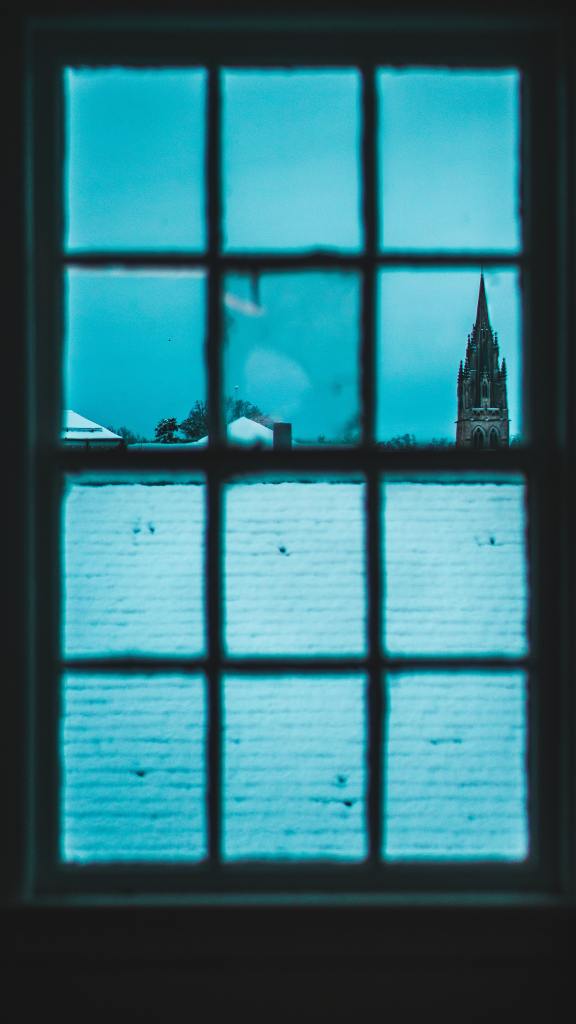
Photo by Casey Nguyen on Unsplash

Closing down to open up

“Hard choices, easy life. Easy choices, hard life.” Jerzy Gregorek

Countries like New Zealand and Australia that mandated proper lockdowns and that had its citizens cooperate are now opening up for trade and commerce again. They will be the “Green” Free Trade zones in 2020.

Countries that screamed about fake news and conspiracy theories haven’t even adequately closed down yet. The failed states will be “Red” no-trade zones as they stagger through the painful process of herd immunity.
The reaction to COVID-19 is like one big The Rorschach Test. COVID-19 is a not a Netflix show that you can turn off when you get bored.

The virus has its own programming schedule and it isn’t On Demand TV like Hulu or Netflix.

Photo by James Wheeler on Pexels.com

Qualified people and geniuses

Immigration policy and criteria are good at spotting talented and qualified people. A merit-based immigration system favors nurses, accountants, engineers, and people with prescriptive degrees and qualifications. These types of immigration profiles are suitable for growing societies, and they tend to add value or fill a gap very quickly. The problem is that nurses and accountants tend to be risk-averse and probably won’t start a company or create the next Yahoo, Apple, or Uber.

Geniuses are a different profile and much more difficult to spot and screen. Geniuses are unpredictable and hard to put in a box. They can also see the future and see around corners. They are the wildcards who start companies that end up employing thousands of doctors and accountants.

A healthy immigration system attracts talented, hardworking people; as well as wild card geniuses who enter the country as refugees, students, farmworker’s families, and green card lotteries.

Geniuses change the world.

“Here’s to the crazy ones, the misfits, the rebels, the troublemakers, the round pegs in the square holes … the ones who see things differently — they’re not fond of rules, and they have no respect for the status quo. … You can quote them, disagree with them, glorify or vilify them, but the only thing you can’t do is ignore them because they change things. … They push the human race forward, and while some may see them as the crazy ones, we see genius, because the people who are crazy enough to think that they can change the world, are the ones who do.” – Apple’s 1997 Think Different campaign


Start and the stress dissipates

The most daunting and stressful projects are the ones you haven’t started yet. A lot of worrying and anxiety dissipates when you break the seal and begin. Once the activation energy is applied then momentum picks up and the helpers arrive.

Speak slowly and keep it real

The best public speakers are authentic. People can spot a faker a mile away.

People pan Elon Musk for being a poor public speaker, but he has the audience eating out of the palm of his hand because he’s candid and authentic. He’s the antithesis of the media trained CEOs and politicians who use prepackaged phrases and say a lot without saying anything.

Speak slowly, pause, and keep it real. That’s the way to connect.

The Pacific Crest Trail in 3 minutes

I loved this video 5-month journey on foot that was condensed into a 3-minute video.

This guy must have knees of steel. Imagine the wear and tear on his body. I wonder how many people start but don’t finish.

The trail is 2,650 miles and starts on the United States-Mexico border, it goes through California, Oregon, and Washington and ends at the United States-Canada border in Manning Park, British Columbia. To put it in perspective it’s 3,000 miles from San Francisco to New York.

He runs a blog called Halfway Anywhere if you want to go deep.

Enjoy!


Lots of water moving around me

We had a cold snap over the weekend. The wind picked up, and the temperature dropped. Hazardous surf warnings were issued for the next few days with big swell expected. The offshore winds that followed the cold front made for blue skies and perfect autumn days.

The day after the storm, I waded into the sea for a swim. The ocean was smooth and crystal clear, but as soon as I started swimming, I could feel the rip current grab and whip me around the rocky point. It’s perfectly normal to swim out with the rip, but today was a little different. There was a lot of water moving around me, and I was getting gently pulled left and right as the swell and current pushed me around. I’ve learned not to fight it and just keep my line and steady my breath.

The forecasted storm swell was on its way, and I could feel it in the water even though it wasn’t visible on the surface. It was like the ocean was playing with me for a bit.

I think this is how animals and birds feel tsunamis before they arrive. They listen to and feel the ocean before humans register a blip on the radar. Humans aren’t tuning into the deeper wavelengths.

The next morning the wind was still blowing offshore, and the surf was firing. The glassy autumn swell had arrived.

More storms are coming.

beach dawn dusk ocean

Photo by Sebastian Voortman on Pexels.com

Lockdown and Locals

Lockdowns are tough for everyone, but especially for people without families. People need community, and right now, that’s not available.

There will probably be long-term mental health issues caused by the prohibition of social events and community gatherings. For a lot of older people who haven’t mastered technology like WhatsApp, Facetime, Zoom, etc – physical isolation also means social isolation.

Pre lockdown, coffee shops, local pubs, drinking holes, tennis clubs, golf clubs, bowling clubs, churches, swimming clubs, etc. all had their resident barflies – “the locals.” These were the people that turned up every night to grab a drink and have a banter.

If it was the pub, then that’s probably where they ate dinner as well.

They were there every night because there was nobody at home who needed them and it got lonely.

They knew the barman, the waitstaff, and the manager.

They had the same table every night.

They ate the special of the day. It was like home cooking for them.

They arrived as the doors opened and were there until the lights turned off, and the tables were wiped down.

They were there every night because it was an extension of their home.

It’s where they went to get human interaction and to socialize.

The members of the club, and the people who worked there were like family.

If they didn’t turn up for dinner one night, I’m sure someone would have call to check in on them.

Some of these clubs and pubs will not make it through the economic pain of the pandemic. I wonder if it’s the same for the old local barflies as well?

man holding mug in front of laptop

Photo by Andrea Piacquadio on Pexels.com

Make the first move

If you bump into someone and they don’t remember your name then introduce yourself again and give them some context to jog their memory.

Everyone is shy, and most of the time they are waiting for you to initiate the conversation, send a follow up email or arrange a time to get together.

Obviously read the room and don’t make time for weirdos, but making the first move in a considerate and respectful way save you time and is welcomed with a sigh of relief most of the time.

Nothing will be private

Don’t say anything about someone in a text, Whatsapp, or email that you wouldn’t be okay saying to them directly, because at some point down the line they will read it.

Most things are best said in person, or with a wink and a nudge.

genevieve-perron-migneron-vXZ_lC0XN4c-unsplashPhoto by Genevieve Perron-Migneron on Unsplash